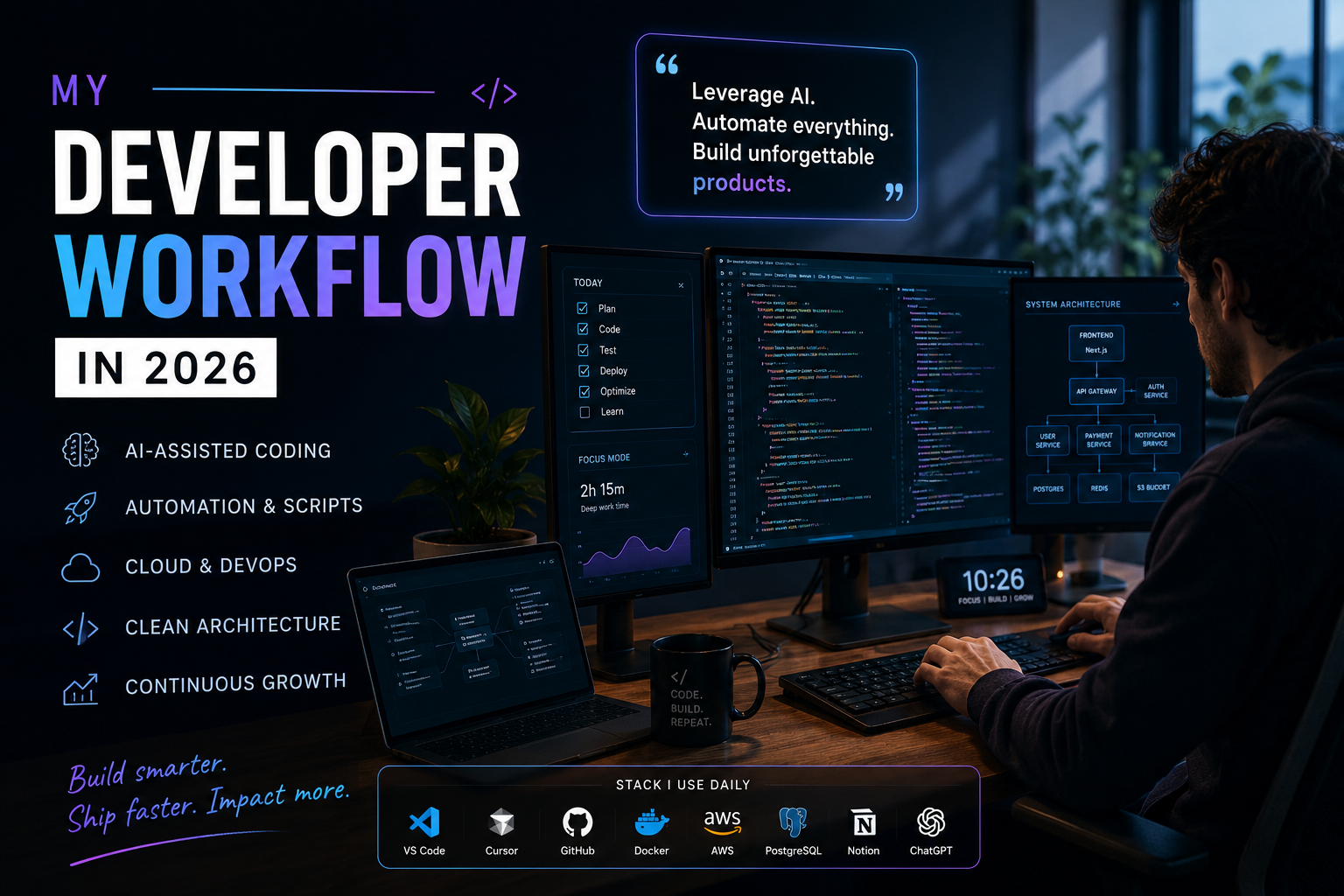
Visual Overview

There was a time when software development was mostly about writing code.
In 2026, that’s no longer true.
Modern engineering is now a combination of architecture thinking, AI collaboration, systems design, automation, product intuition, and execution speed. The developers creating meaningful impact today are not necessarily the ones typing the fastest — they are the ones building leverage.
Over the past few years, my workflow has evolved from traditional development into something much more integrated:
- AI-assisted engineering
- automated infrastructure
- rapid prototyping
- context-driven development
- multi-agent tooling
- human-centered product thinking
This is the workflow I currently use to design, build, ship, and scale software in 2026.
The Shift From “Writing Code” to “Designing Systems”
One of the biggest mindset changes I’ve made is understanding that code is no longer the bottleneck.
Decision-making is.
The real engineering challenge today is:
- choosing the right abstractions
- designing maintainable systems
- reducing operational complexity
- integrating AI effectively
- understanding product constraints
- creating scalable workflows
AI can generate code.
But it still takes an engineer to:
- define architecture
- validate tradeoffs
- optimize performance
- secure systems
- align technology with business goals
That’s where modern developers create disproportionate value.
My Core Stack in 2026
My workflow is intentionally lightweight, automation-heavy, and AI-integrated.
Primary Technologies
Frontend
- React
- Next.js
- TypeScript
- TailwindCSS
- Framer Motion
Backend
- Node.js
- Python
- FastAPI
- PostgreSQL
- Redis
Infrastructure
- Docker
- Kubernetes
- Cloud-native deployments
- CI/CD pipelines
- Observability tooling
AI Stack
- LLM orchestration
- AI agents
- Retrieval systems
- Vector databases
- Prompt engineering pipelines
- Automation workflows
AI Is No Longer a Tool — It’s Part of the Workflow
The biggest difference between my workflow in 2023 and 2026 is simple:
AI is integrated into every stage of development.
Not just code generation.
Everything.
Where AI Fits Into My Workflow
1. Architecture Brainstorming
Before writing code, I use AI to explore:
- architecture tradeoffs
- scaling strategies
- security concerns
- database design
- API contracts
- event-driven patterns
The goal is not to blindly accept outputs.
The goal is accelerated thinking.
2. Boilerplate Reduction
I avoid spending mental energy on repetitive implementation.
AI handles:
- API scaffolding
- validation schemas
- repetitive CRUD operations
- test generation
- documentation drafts
- migration generation
That gives me more time for higher-level engineering.
Example:
// Example: Fast API route generation with validation
import { z } from 'zod'

const UserSchema = z.object({
  name: z.string(),
  email: z.string().email(),
})

export async function POST(req: Request) {
  const body = await req.json()
  const parsed = UserSchema.parse(body)

  // business logic

  return Response.json({
    success: true,
    data: parsed,
  })
}
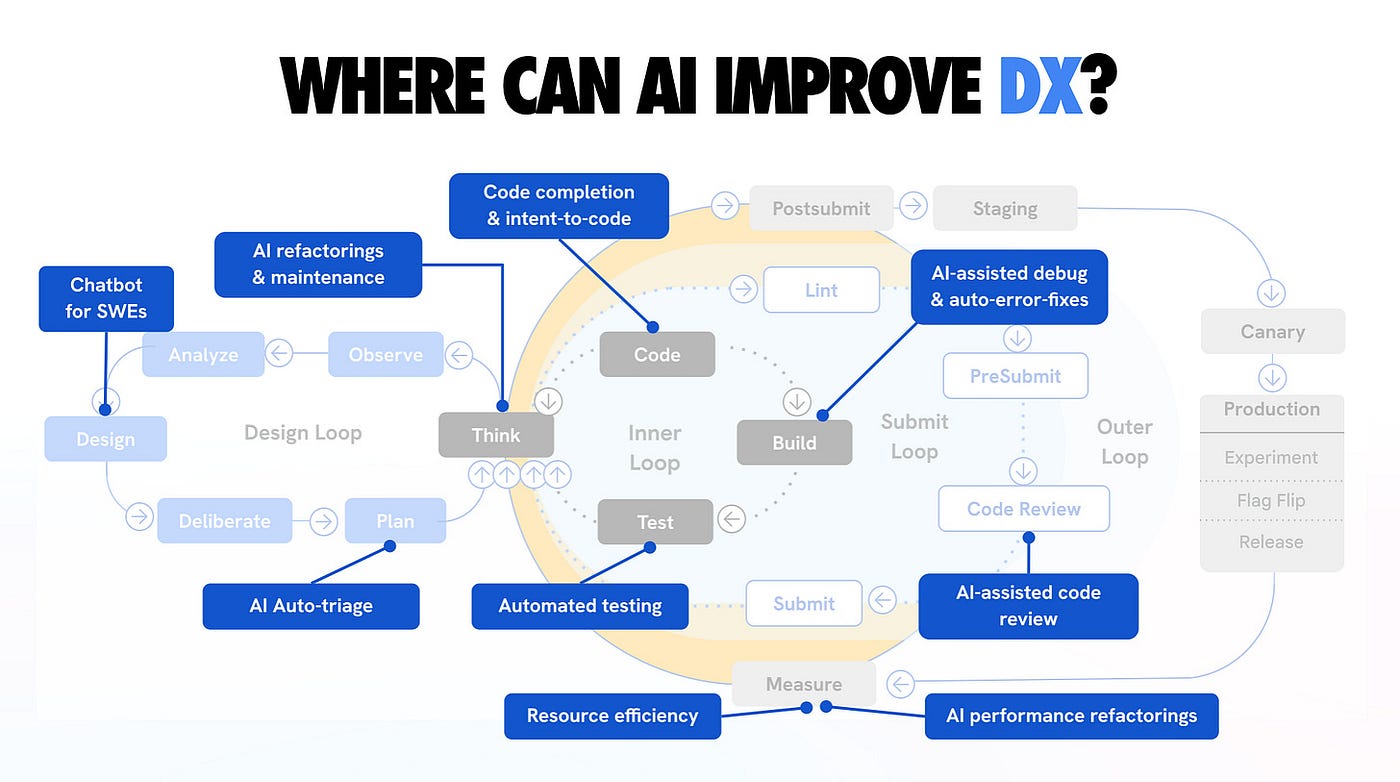
3. Debugging and Refactoring
Modern debugging is faster because AI helps identify:
- race conditions
- edge cases
- performance bottlenecks
- inefficient queries
- architectural smells
- security vulnerabilities
But verification still matters.
I never treat AI output as production truth.
I treat it as a high-speed engineering collaborator.
Context Engineering > Prompt Engineering
One of the most underrated skills in 2026 is context engineering.
Most developers still think AI effectiveness depends on prompts.
It doesn’t.
The quality of AI output is mostly determined by:
- repository structure
- documentation quality
- architectural clarity
- naming consistency
- memory systems
- retrieval pipelines
- development conventions
Good context produces good systems.
This is why I spend significant time organizing:
- project documentation
- decision logs
- architecture notes
- reusable patterns
- internal tooling
The result is compound productivity.
My Typical Development Cycle
Phase 1 — System Design
Before implementation:
- define the problem clearly
- map user flow
- design API boundaries
- identify scaling constraints
- evaluate tradeoffs
- create architecture diagrams
I optimize for simplicity first.
Phase 2 — Rapid Prototyping
I build fast.
Very fast.
The goal is not perfection.
The goal is validating assumptions early.
This stage usually includes:
- AI-assisted scaffolding
- reusable templates
- containerized environments
- mock APIs
- quick deployment previews
Example Docker setup:
FROM node:22-alpine

WORKDIR /app

COPY package*.json ./
RUN npm install

COPY . .

EXPOSE 3000

CMD ["npm", "run", "dev"]
Phase 3 — Optimization
Once the product direction is validated:
- improve architecture
- reduce latency
- optimize queries
- harden security
- improve observability
- add testing layers
- scale infrastructure
This is where engineering discipline matters.
Development Environment Setup
A clean environment reduces friction.
My setup focuses heavily on speed and clarity.
Editor
- VS Code
- AI coding extensions
- terminal-first workflow
- keyboard-driven navigation
Terminal Stack
- tmux
- zsh
- Docker CLI
- kubectl
- Git automation aliases
Monitoring
- structured logs
- distributed tracing
- metrics dashboards
- automated alerts
I want instant visibility into systems.
The Importance of Automation
In 2026, repetitive manual workflows are expensive.
Anything repeated more than twice should probably be automated.
That includes:
- deployments
- testing
- code formatting
- environment provisioning
- CI/CD pipelines
- issue triaging
- changelog generation
Example GitHub Actions workflow:
name: CI

on:
  push:
    branches:
      - main

jobs:
  build:
    runs-on: ubuntu-latest

    steps:
      - uses: actions/checkout@v4

      - uses: actions/setup-node@v4
        with:
          node-version: 22

      - run: npm install
      - run: npm run build
      - run: npm test
Automation creates leverage.
And leverage compounds.
Building Publicly Changed My Engineering Perspective
One of the best decisions I made was documenting parts of my journey publicly.
Writing technical content forced me to:
- simplify complex ideas
- improve communication
- structure knowledge clearly
- think more deeply about systems
- refine my engineering philosophy
Personal branding for developers is often misunderstood.
It’s not about chasing attention.
It’s about creating visible proof of competence.
A strong technical presence creates opportunities before you even ask for them.
What I Focus on Now
As the industry evolves, I’m increasingly focused on:
- AI-native applications
- intelligent automation
- scalable backend systems
- developer tooling
- autonomous workflows
- performance engineering
- product-oriented development
The future belongs to engineers who can combine:
- technical depth
- execution speed
- systems thinking
- communication
- adaptability
That combination is incredibly rare.
Final Thoughts
My workflow in 2026 is not about replacing engineering with AI.
It’s about amplifying engineering with better systems.
The developers who thrive over the next decade will be the ones who:
- learn continuously
- adapt aggressively
- automate intelligently
- think architecturally
- build consistently
- communicate clearly
Technology keeps changing.
But the core principle remains the same:
Great engineers create clarity from complexity.
And that’s the kind of work I want to keep building.
Connect
If you’re building in AI, scalable systems, automation, or modern software architecture, feel free to connect.
I’m always interested in:
- ambitious engineering problems
- innovative products
- AI-native workflows
- developer infrastructure
- meaningful collaborations
Because the future of software is no longer just about code.
It’s about intelligent systems built by engineers who know how to think beyond it.